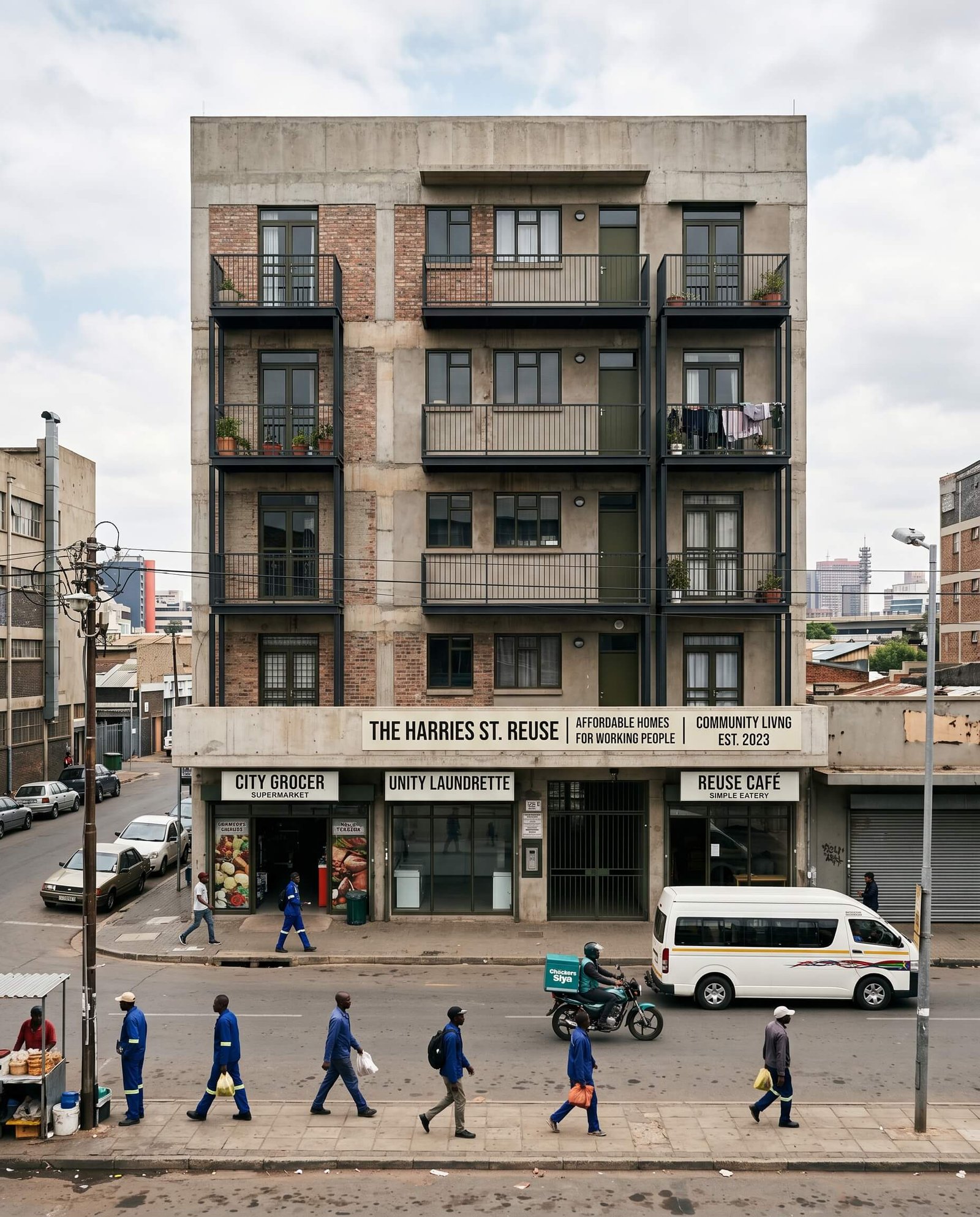
Repurpose the building, not the problem.
Dead schools, municipal assets, offices and neglected mixed-use stock can become a repeatable housing platform.
Affordable urban living, engineered through mixed-use economics.
Bloom Housing acquires overlooked urban assets, redesigns them for disciplined, dignified living, and uses productive ground-floor tenants to make ultra-low-cost rental housing viable in the city.
The Problem
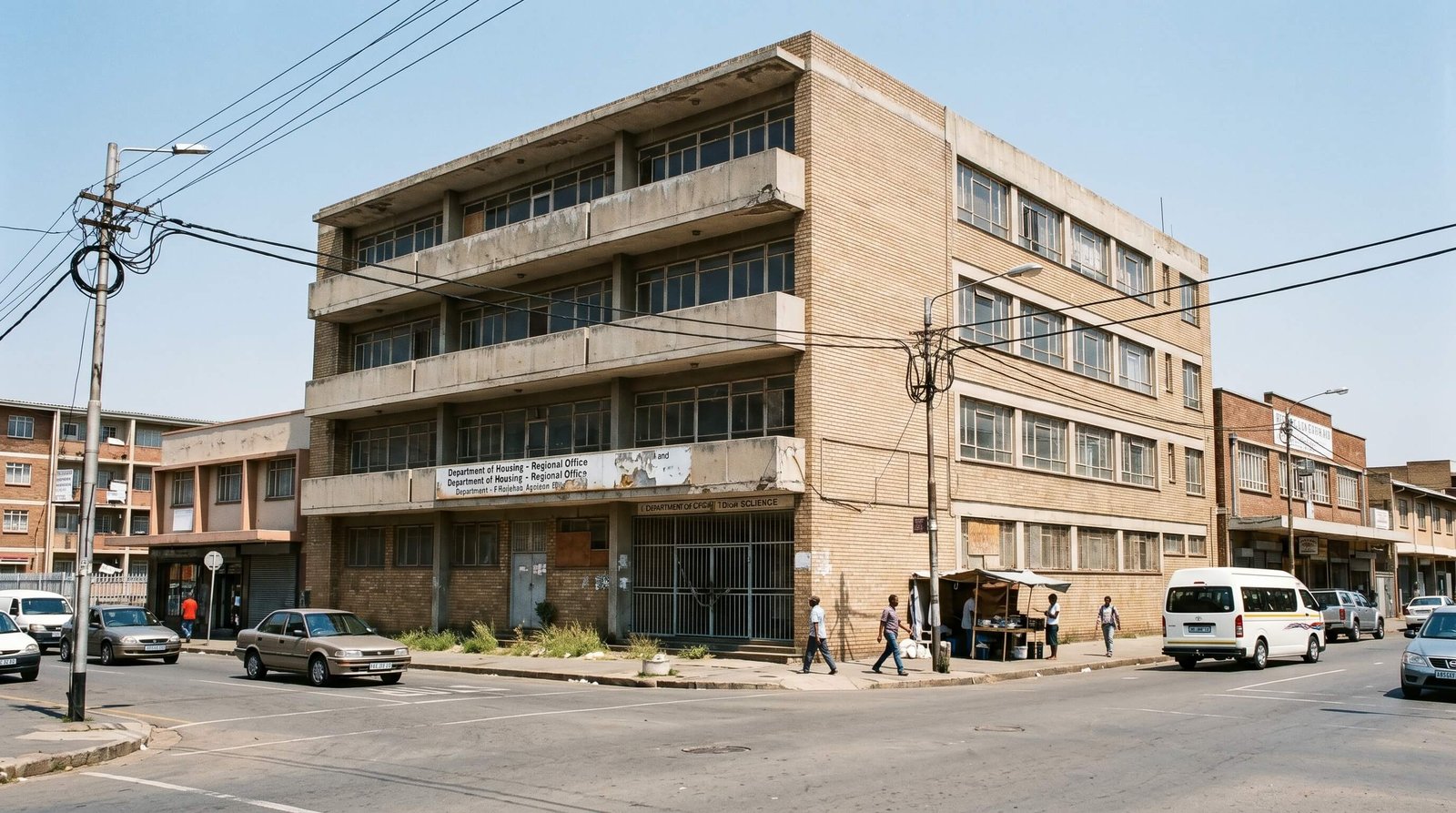
Working people are pushed into a false choice: unsafe informal living on one side, unaffordable formal housing on the other.
Across South African cities, old buildings, abandoned schools and underused public assets sit idle while demand for decent urban housing keeps rising.
Standard development models rarely deliver rent levels that nurses, teachers, cleaners, drivers and security staff can carry every month.
The Model
We target neglected offices, schools, state assets and underused urban properties where basis matters more than prestige.
Units are planned for durability, density, light, sanitation and operational simplicity, with dignified common spaces and disciplined circulation.
Productive tenants add real revenue and everyday usefulness, strengthening the economics without pretending the asset is a lifestyle precinct.
The result is a repeatable mixed-use model aimed at rentals in the R2,000 to R3,000 per month range in well-located urban areas.
Mixed-Use That Works
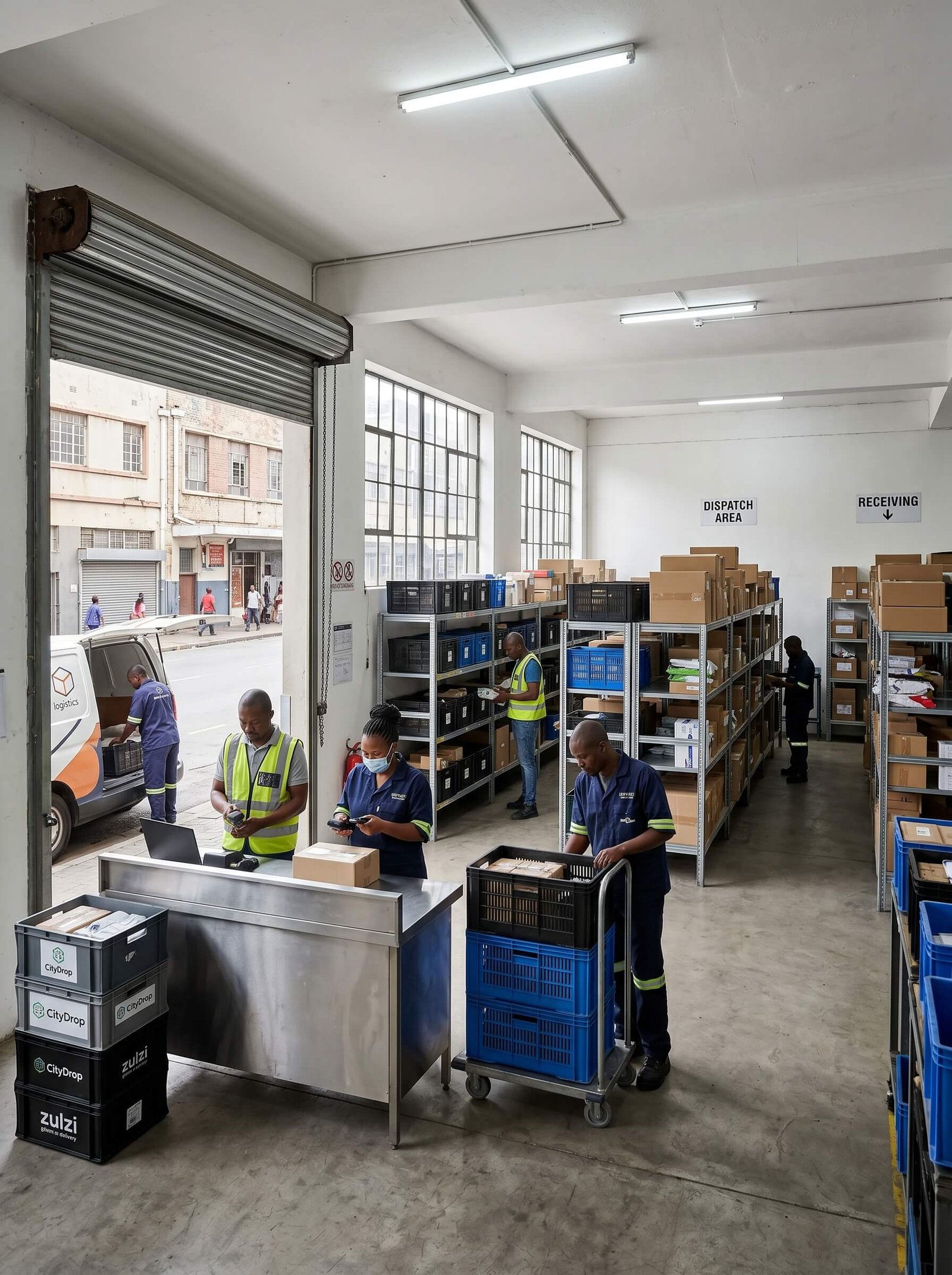
Ground-floor space should carry the economics of the building and serve dense urban life. That means operators with turnover, utility and operational fit.
High-throughput food operations built for delivery demand, not aspirational frontage.
Compact fulfillment spaces that support local logistics and stable commercial yield.
Useful operators that reduce daily friction for residents and strengthen asset performance.
Repair, storage, distribution and practical trade uses that fit the realities of working urban districts.
Who It's For
This is housing for workers who deserve clean, stable urban homes close to jobs, transport and daily life.
Nurses
Teachers
Retail workers
Security staff
Cleaners
Warehouse teams
Drivers
Hospitality workers
Bloom Housing is built for households that are financially disciplined, city-dependent and routinely excluded from decent formal housing.
Why This Can Win
Value starts with distressed, ignored or misused assets where others see complexity and walk away.
Residents need proximity to transport, jobs and city infrastructure more than suburban distance disguised as affordability.
Utility-focused commercial space helps carry the building and improves unit affordability.
Design, operations and tenant mix are approached as a system that can scale from one asset to the next.
The people who hold cities together already exist in volume. The gap is the product.
Pilot / Partnership
We want to work with municipalities holding old assets, owners of dead buildings, practical commercial operators, developers with execution capacity, and funders aligned with serious urban housing delivery.
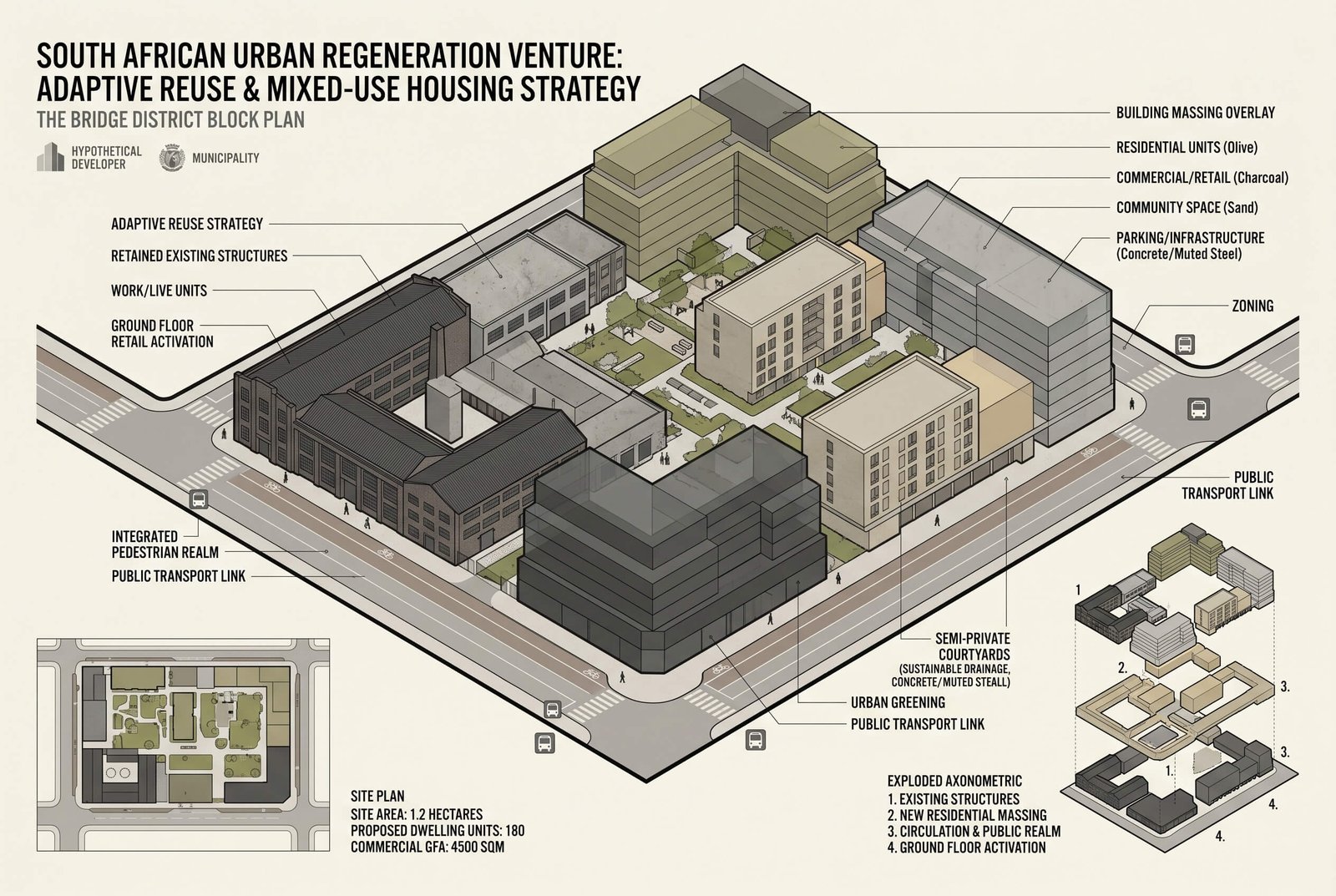
Start The Conversation
Bloom Housing is building a serious platform for moving working people out of shacks and into disciplined, affordable city living. If you can help unlock sites, finance or operations, we should be talking.